Beijing has vehemently denied all the allegations, and states its camps in the location are “vocational instruction centers” created to fight terrorism and spiritual extremism. But previous 7 days, a landmark investment deal between the European Union and China was forged into doubt soon after officials traded sanctions more than Xinjiang.
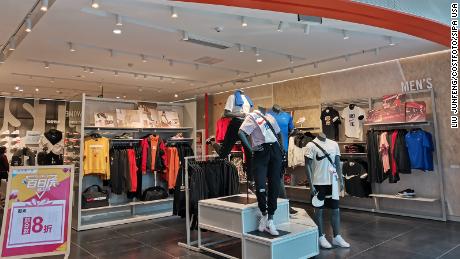
“We are performing collectively with our colleagues in China to do all the things we can to control the recent problems and discover a way ahead,” H&M reported in a statement Wednesday.
Beijing has built it obvious that multinational corporations have to observe its regulations if they want to work in the place, and gaining favor can have to have anything from abiding by restrictive laws to saying a number of great terms about China. Quite a few corporations have usually been keen to perform alongside, given how enticing the large economic climate is as a industry for everything from cars and outfits to motion pictures and luxury goods.
But the escalating political blowback may possibly make some of those people interactions untenable. Just as China has whipped its citizens into a nationalist frenzy more than Xinjiang, consumers, lawmakers and traders are stepping up the pressure on Western businesses to scrutinize their supply chains for proof of human rights abuses. That is creating it tough for firms to avoid finding sides.
“These companies are just squeezed in the center and there is no magic reply,” claimed James McGregor, chairman of consulting business APCO Worldwide’s better China division. “I feel China’s emotion seriously threatened by all of these sanctions, and has made the decision just to strike back again as strongly as they can to test to get these providers to impact their governments to variety of tone down and back again off.”
A tough-but-prized marketplace
Foreign corporations are not able to simply just disregard the world’s 2nd largest financial system. Its
developing middle class is a loaded client sector for numerous corporations.
“Accessing the internal market in China has often been the attract,” claimed Bonnie Glaser, a senior adviser for Asia and the director of the China Electrical power Venture at the Heart for Strategic and International Research. “A long time ago, when organizations 1st begun coming to China — even if they weren’t generating funds for a selection of a long time — they stayed because finally the persons are heading to have extra cash and likely to be capable to devote.”
But breaking into China also signifies profitable more than notoriously strict regulators who wield wide management about who will get to enter and what they get to do.
International firms are generally pressured to concede specified aspects of their organization in advance of they are authorized obtain to the current market, which include by way of joint ventures established with community associates. When some regulations have been eased in latest years, they’re even now a resource of tension for corporations who complain that these preparations drive them to
give up technological know-how in exchange for entry.Other companies
have been locked out entirely since of a refusal to adhere to procedures.
Google (GOOGL), for illustration, offered look for in China from 2006 to 2010 with censored results, but was at some point blocked when the company determined it would close that observe. Quite a few yrs afterwards, it thought of returning to China, but was closely criticized by human rights teams cautious of the ruling Chinese Communist Party’s large censorship apparatus.
Thrust into controversy
People who gain entry to China, meanwhile, can occasionally uncover on their own thrust into controversy, to detrimental effect. In 2017, many retailers owned by South Korea’s Lotte were being shut down throughout China immedia
tely after the conglomerate turned embroiled in the
deployment of a controversial US missile protection process in its house region. China had bitterly opposed South Korea’s final decision to deploy the technique, which it observed as a danger to its have safety.
The next year, the Chinese government demanded that
American Airlines (AAL),
Delta (DAL) and
United (UAL) change the way they referred to Taiwan or risk sanctions in China, just one of the world’s major marketplaces for air vacation. Beijing has
extended been sensitive about any recommendation that Taiwan is not a portion of its territory, however the island has been ruled separately for many years.
And in 2019, the NBA grew to become entangled in its personal struggle with Beijing soon after sporting activities executive Daryl Morey, who was serving as basic supervisor of the Houston Rockets, tweeted guidance for pro-democracy protesters in Hong Kong. Chinese point out television network CCTV pulled NBA game titles, although all of the league’s official Chinese companions suspended ties.
Even organizations that get pleasure from a relatively sturdy connection with Chinese officers aren’t immune.
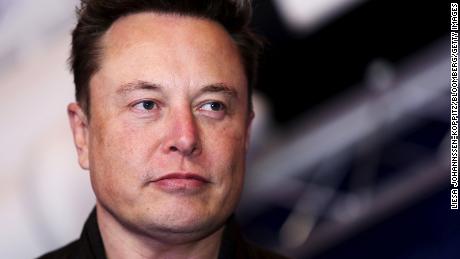
Tesla (TSLA) — which has relished exclusive cure from Beijing — was lately caught on the back foot by inquiries about the excellent of its Shanghai-created Product 3s and no matter whether its motor vehicle cameras
could be used for spying. A few times later on, CEO Elon Musk lavished praise on China in an interview with point out media.
“Firms already are pressured to select sides, and they try out actually challenging not to have to do that publicly,” mentioned Isaac Stone Fish, founder and CEO of Method Hazards, a exploration agency focused on corporate possibility in China. He pointed to the NBA as the “most infamous instance of that spilling out into the general public.”
“They’re making an attempt to equilibrium amongst their most important current market and their most significant expansion market place, and from time to time they make moral sacrifices,” Fish extra.
The deck is stacked
International corporations are virtually normally at a downside when it will come to dealing with China.
“The Chinese have large economic leverage,” Glaser reported. “They normally do this in ways that they are harming a distinct sector or market or individual business, but where by China pays no charge.”
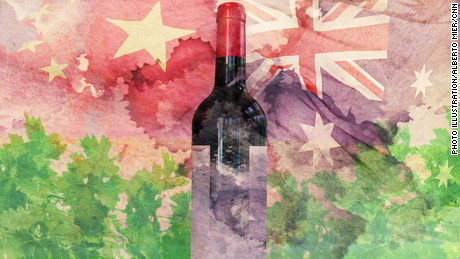
She pointed to the country’s tensions with Australia, where exports of wine, beef, timber and other goods to China have been damage by steep tariffs or other road blocks. Australian industries crucial to China’s financial recovery, these kinds of as iron ore, have escaped significant punishment.
China’s method right here is to “kill the hen to scare the monkey,” Glaser reported, utilizing a well-known Chinese idiom. “They know entire perfectly the other international locations are observing what is actually going on.”
Firms also show up to be learning that they can not often act in a vacuum when it comes to China — their statements to Beijing and Chinese customers now usually gain traction with other audiences.
The NBA, for example, failed to just anger Chinese audiences when it tried to clarify the remarks from the Houston Rockets’ Morey about Hong Kong. A lukewarm reaction from NBA Commissioner Adam Silver that supported Morey “in phrases of his means to workout his flexibility of expression” did not just infuriate Chinese audiences US politicians criticized the
group for not taking a powerful adequate stand.
And investors globally are also starting to pile the tension on businesses they believe usually are not executing ample to tackle alleged human rights abuses. Previously this week, the Interfaith Centre on Corporate Duty -— a shareholder advocacy team concentrated on environmental, social and governance challenges —
explained to Reuters that it was reaching out to dozens of organizations for details about their source chains and irrespective of whether they could at all be connected to Xinjiang.
Satisfying no just one
The Xinjiang challenge has made it even far more difficult to remember to everybody at residence and in China.
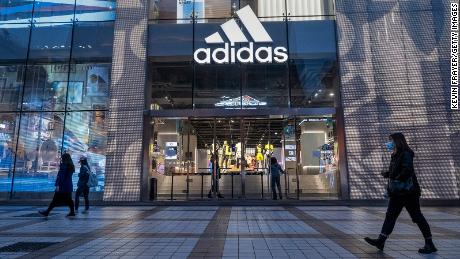
Numerous international makes, like Nike and Adidas, confronted monumental force last summer time from activists to assure that their provide chains are totally free of ties to Xinjiang. China is now using the statements they released about that time from them.
“They really feel like they once more placated the folks back property. Now all the unexpected they have a disaster in China,” Glaser claimed of the difficulty struggling with these brand names.
H&M items were being pulled from Chinese e-commerce internet sites run by
Alibaba (BABA) and
JD.com (JD) as the backlash received traction last week, although clothing giants Nike and Adidas appeared to escape these spectacular measures. McGregor, the APCO Throughout the world chairman, suspected that China’s deep romantic relationship with these manufacturers could have saved them.
Nike and Adidas advertising dollars “are very large for Chinese sports activities,” he explained. “You will find Chinese companies that are really dependent on income from Nike and Adidas and the other sporting activities brand names, whereas H&M is just a retailer promoting into the industry.”
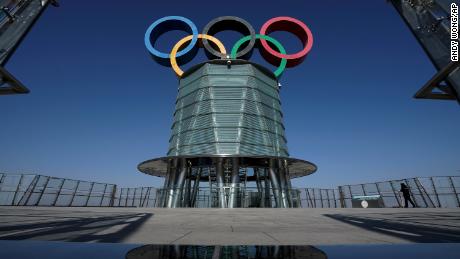
Nevertheless, the tensions may well only improve a lot more critical in the coming months: Beijing is scheduled to host the 2022 Winter Olympics, and dozens of marketing campaign groups have currently started contacting for a boycott.
McGregor reported that China may be mindful of upsetting the world too considerably in advance of that time. Immediately after all, if tensions appear to a boil then the country challenges tarnishing its status on a large phase. But that even now leaves quite a few businesses in a difficult place.
“Most of them are just making an attempt to retain their heads down and get by it right now,” he reported.
H&M’s comments on Wednesday, produced days just after it was swept up in the Chinese boycott, may be indicative of that tension. The just about 300-word assertion is imprecise and thoroughly worded, and stays well very clear of saying nearly anything definitive on the enormously controversial problem that landed it in incredibly hot drinking water to begin with.